

Numerical, three-dimensional model of painting requires creating very extensive database of properties that characterize all the materials making up the painting. In order to correctly predict the climate fluctuations effect on the state of preservation of the artefact, it is necessary to know precisely properties of each of the layers that the painting consists of, and then perform their superposition to recreate the real, physical system.
The main goal of the GRIEG project is to understand the mechanism of the crack pattern formation, both in canvas paintings and panel paintings. Cultural heritage science, including our group, already has a large amount of information about preparatory layer, the so-called gesso. The properties of the painting layers remain unknown, and we are ready to fill this gap!
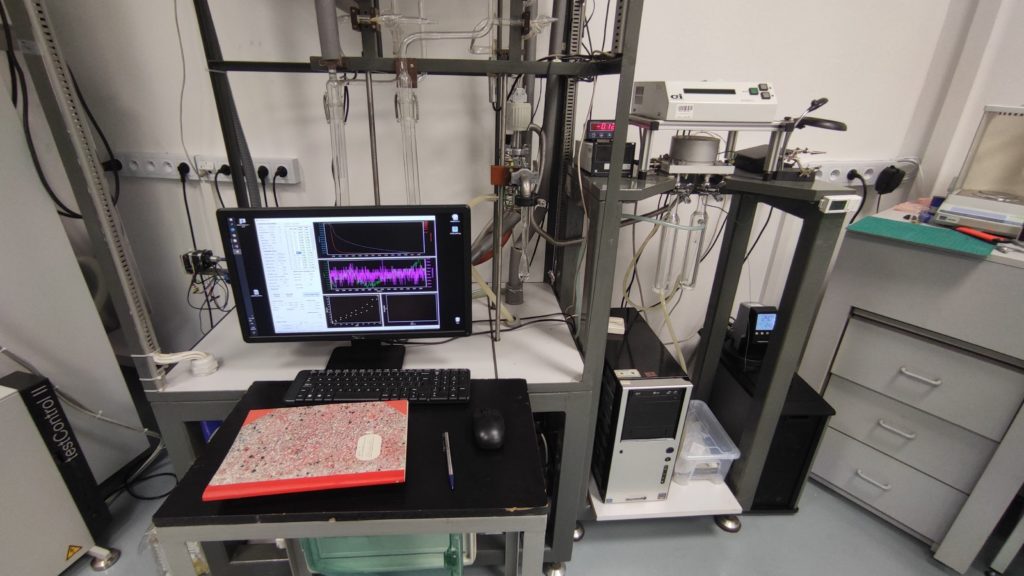
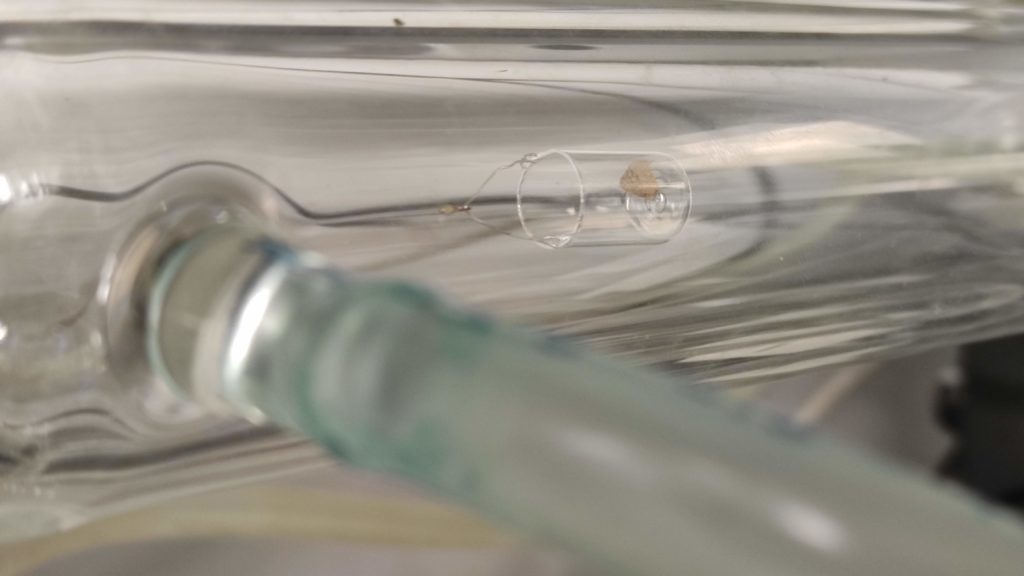
The material can react to changes in the moisture content in its environment by adsorption or desorption of water vapor. On our laboratory microbalance we are currently carrying out sorption measurements of tempera. We use each of the techniques available to us to learn about tempera paints as much as possible!