

We have completed a long-term campaign of microclimate monitoring and diagnosis of the exhibition conditions in the Boim Chapel in Lviv, led by Dr. Marcin Strojecki. Marcin acted on behalf of POLONIKA – the National Institute of Polish Cultural Heritage Abroad.
The Boim Chapel, or rather the Chapel of the Holy Trinity and the Passion of Christ, is a Lviv monument erected in the 17th century and used in later years as the tomb chapel of the Boim family of merchants. Currently, it is a branch of the Lviv Picture Gallery. More information about the chapel can be found here.
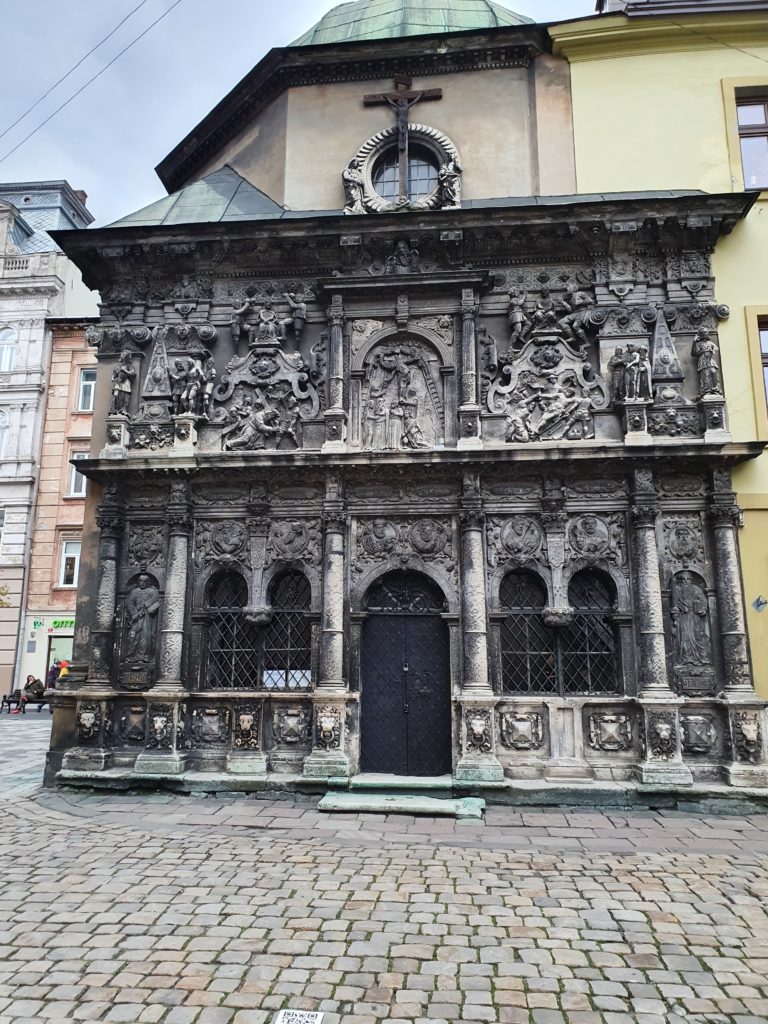
The photo shows the facade of the chapel. On the right: altar with installed monitoring sensors 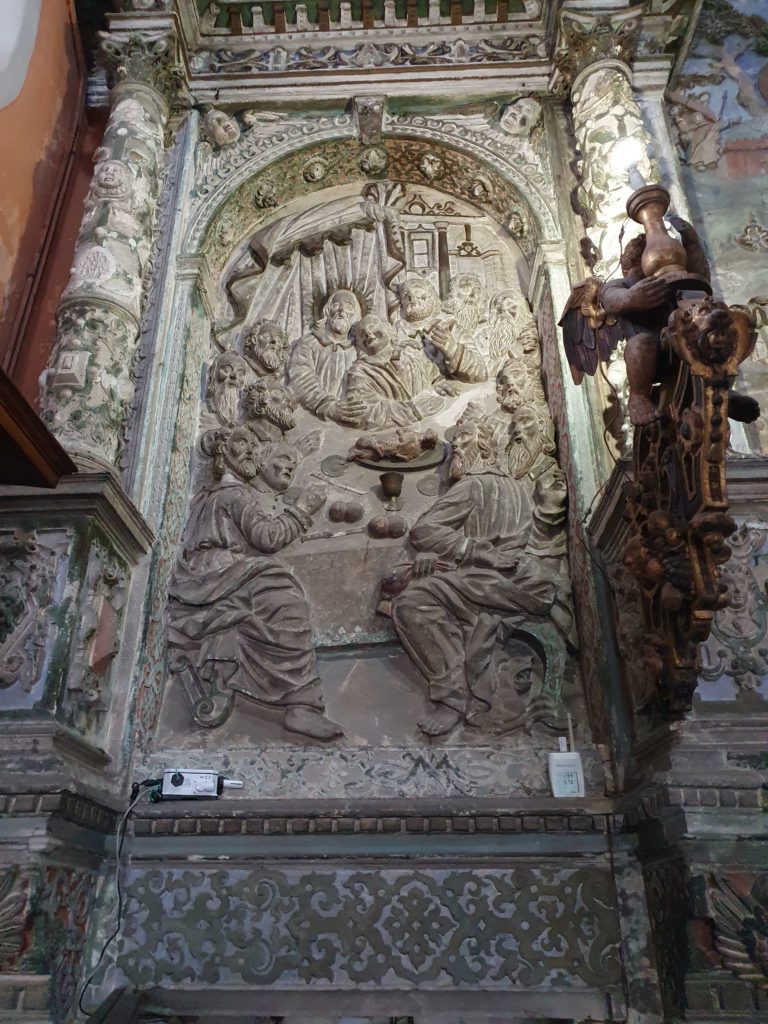
The monitoring of the interior of the chapel was aimed at determining the potential conservation threats resulting from microclimatic instability, and the measurement provided information on parameters such as air temperature and relative humidity, concentration of carbon dioxide (CO2) and particular matter in the air.
Although there are currently no typical museum objects in the interior of the Boim Chapel that would be vulnerable to microclimate changes, an analysis of environmental instability was carried out to characterize the chapel as a potential place for storage and display of sensitive objects.
The result of the research was to determine the stability of the microclimate in the daily, medium and long-term (annual) cycle and the dependence of the indoor conditions inside the chapel on changes in outdoor weather conditions, as well as to assess the risks associated with soiling of architectural surfaces.
Based on the results, Dr. Strojecki developed a strategy for controlling environmental conditions that can be used to effectively protect the interior of the chapel.