

We are happy to share with you an interactive scan of panel painting from one of Krakow’s collections, which allows us, and now also you, to study craquelures! The image is interactive – play with it. A full gallery of scans is available by clicking here. If you are in the IKiFP click here instead. READ MORE
Author: Heritage Science

Open competition for the position of Research Assistant in our group!
We encourage you to join our group and apply for the position of Research Assistant! We are looking for a mechanical engineer, material engineer or physicist for a period of at least 24 months. The assistant, supervised by the group leader, will participate in two projects aimed at developing a mechanical model of paint layers READ MORE

Is tempera paint hygroscopic?
Numerical, three-dimensional model of painting requires creating very extensive database of properties that characterize all the materials making up the painting. In order to correctly predict the climate fluctuations effect on the state of preservation of the artefact, it is necessary to know precisely properties of each of the layers that the painting consists of, READ MORE

Craquelures are everywhere
Weekend bike trip to Keszthely, Hungary leaves extraordinary memories but also adds to discussion on craquelures. Aren’t they familiar?
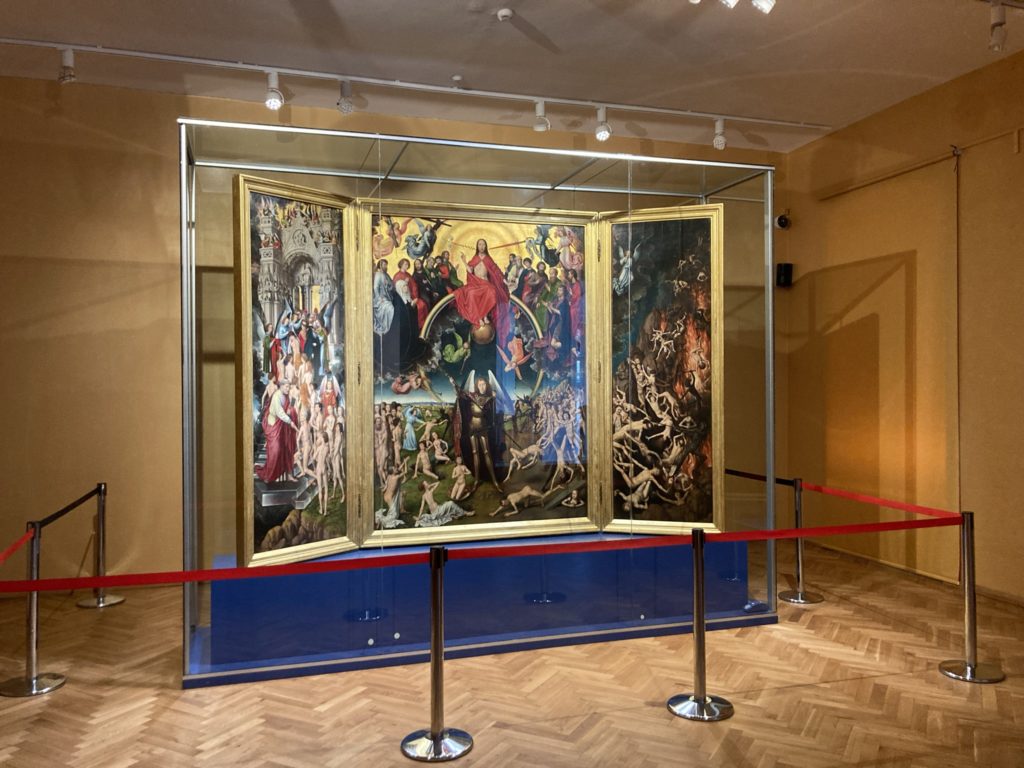
Risk analysis for Memling’s “The Last Judgment” triptych
Łukasz Bratasz was asked to carry out a risk analysis for the triptych “The Last Judgment” by Hans Memling. It is one of the most valuable works of art in Polish collections and can be seen at the National Museum in Gdańsk. The painting was created in the 15th century and was painted on a READ MORE
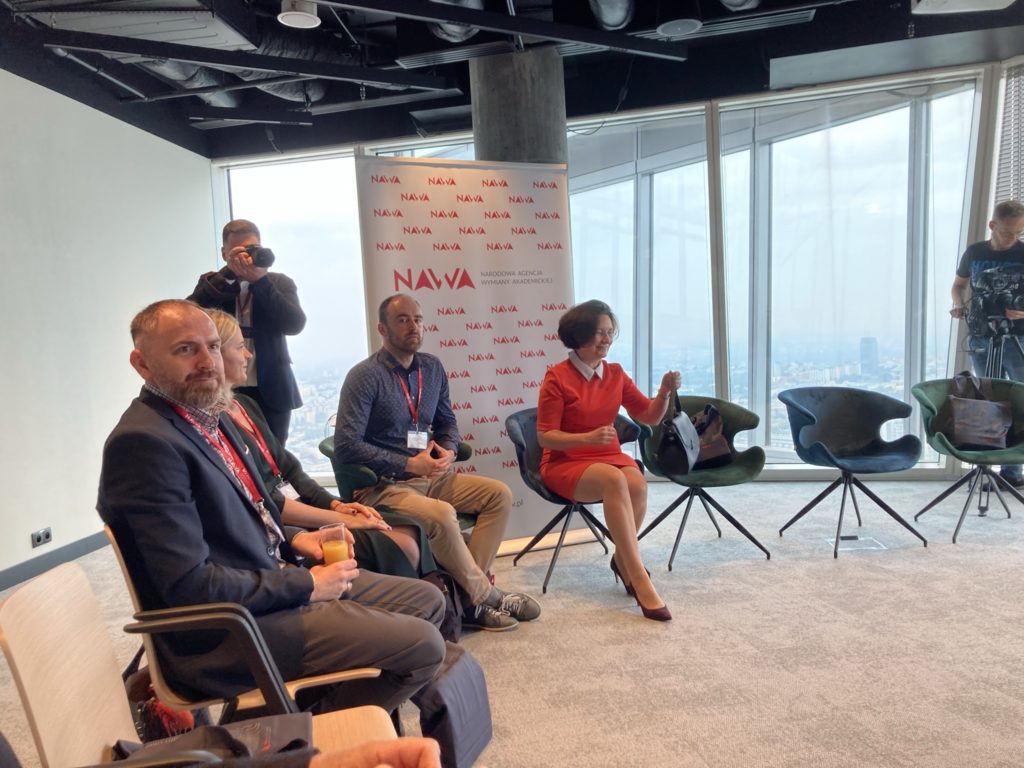
Łukasz Bratasz at the meeting of the Polish Returns winners
Three years ago, Łukasz Bratasz won the first edition of the Polish Returns program organized by the National Agency for Academic Exchange (NAWA). This year, he was invited to participate in a meeting of the winners of program’s previous editions. It was an encouragement for scientists to exchange experiences both from working abroad and in READ MORE

We publish the results of research on the fracture saturation in panel paintings
An article by three of our group colleagues: Dr. Jamalabadi, Dr. Zabari and Prof. Bratasz, concerning the fracture saturation in panel paintings has just been published in Wood Science and Technology. Panel paintings are multi-layer structures composed of wood support, preparatory layer, paint and varnish. Due to their vulnerability to humidity fluctuations in their environment, READ MORE

Conference summarizing the SyMBoL project
The conference summarizing the research carried out under the SyMBoL project “Sustainable Management of heritage Buildings in a Long-term perspective” (project no. 274749) is already behind us. The main idea of the project is to protect Norwegian stave churches (stavkirker), priceless representatives of wooden architecture, against the dangers of climate changes, both external and internal. READ MORE
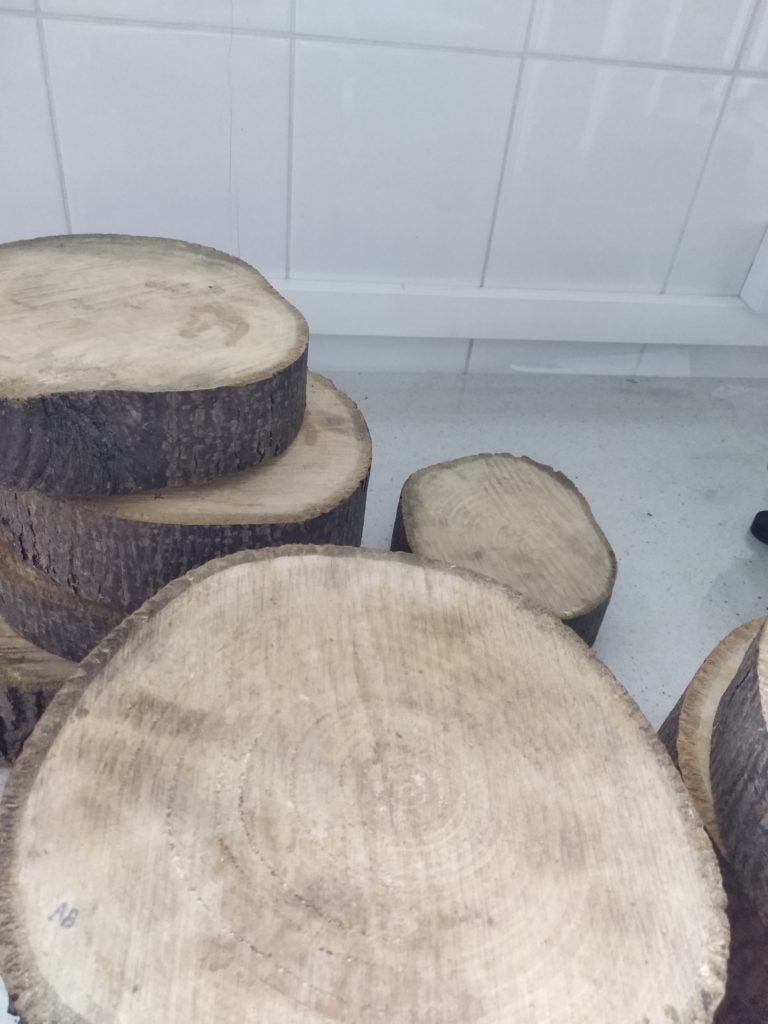
In search of lime wood to study the risk of crack development in sculptures
In the PRELUDIUM project, we planned to create an extensive database of mechanical properties of lime wood at different relative humidity levels of the environment. The database will contain the parameters needed for numerical simulations, such as Young’s modulus and Poisson’s ratios defined in the anatomical directions of the wood, and most importantly – the READ MORE

Academic exchanges are back! We host two foreign PhD students
The COVID-19 virus has caused quite a slide in many areas of life, including without a doubt science. But is it possible to imagine the world of science without academic exchanges and international cooperation? After more than 1.5 years from the planned dates, we are finally hosting two foreign PhD students in the field of READ MORE